




Search











Julian Lage Quartet
October 26thThe Lensic's Boo Bash
October 30thClay Street Unit
October 30thGhost Light Groove
October 30thRyan Bingham and the Texas Gentlemen
November 3rdThe Surge: An Ode to Sinéad O'Connor
November 4thUB40
November 4thJay Webb
November 5thTodd Rundgren
November 6thChristian Löffler
November 6thFREE | Trish Toledo
November 7thSister Sadie
November 7thRodrigo y Gabriela - SOLD OUT
November 7thLiana Flores
November 7thFREE | Black Pearl Band
November 8thTommy Castro & The Painkillers + GA-20
November 8thGilla Band
November 8thLyle Lovett - SOLD OUT
November 9thPuma Blue
November 9thLyle Lovett - SOLD OUT
November 10thTwo Runner
November 10thBayonne
November 10thJohn Craigie
November 11thBuena Vista Orchestra - SOLD OUT
November 11thBahamas
November 11thPhilip Glass Ensemble: Powaqqatsi
November 12thJohn Craigie
November 12thSlothrust
November 13thDave Hause and The Mermaid
November 13thAlma
November 14thLil Fish + Govinda
November 14thDerek Hough - SOLD OUT
November 16thBuzzcocks
November 18thBluey's Big Play
November 19thNick Shoulders
November 19thMireya Ramos and The Poor Choices
November 20thLeanna Firestone
November 22ndCat Clyde & Dean Johnson
November 24thDweezil Zappa
November 24thLumasi
November 28thBonnie Prince Billy - SOLD OUT
December 2ndSqwerv
December 2ndBonnie Prince Billy - SOLD OUT
December 3rdBobby Rush
December 3rdBonnie Prince Billy
December 4thAoife O'Donovan and Chris Thile
December 7thPostmodern Jukebox
December 9thWade Forster - SOLD OUT
December 11thFather John Misty (Solo) - SOLD OUT
December 12thRobert Earl Keen - I Will Survive...Christmas
December 13thVictor Wooten & The Wooten Brothers
December 16thJudy Collins
December 22ndJoe Illick and The New Year's Eve Orchestra
December 31stFruition
January 17thBallet Hispánico New York
January 24thThird Coast Percussion: Ripples in the Water
January 27thAudra McDonald
January 29thZoltan Kaszas: Road Warrior Tour
January 30thLucius
January 31stEddie 9V
February 2ndPeking Acrobats
February 3rdThe Arcadian Wild
February 3rdChris Fleming Live
February 5thThe Hip Abduction
February 7thDelfeayo Marsalis & The Uptown Jazz Orchestra
February 9thLotus
February 9thSolas
February 11thMalpaso Dance Company
February 18thGirl Ultra
February 21stInternational Guitar Night
February 24thThe Lemonheads
February 26thJazz at Lincoln Center Orchestra
March 1stDaniel Donato's Cosmic Country
March 3rdPalaver Strings
March 4thSungazer
March 5thThe Boy Who Cried Wolf
March 7thToo Many Zooz
March 13thSaxsquatch
March 14thThe Hot Sardines
March 19thDurand Jones & The Indications
March 23rdLang Lang
April 1stTrae Crowder
April 3rdAga Khan Master Musicians
April 4thBranford Marsalis and Dianne Reeves
April 7thTHAO
April 9thJason Carter Band
April 18thYAMATO--The Drummers of Japan
April 21stAngélique Kidjo
April 27thChanticleer
April 30thAn Evening with David Sedaris
May 5thAn Evening with David Sedaris
May 6thThe Wailin' Jennys
June 1stThe Wailin' Jennys
June 2nd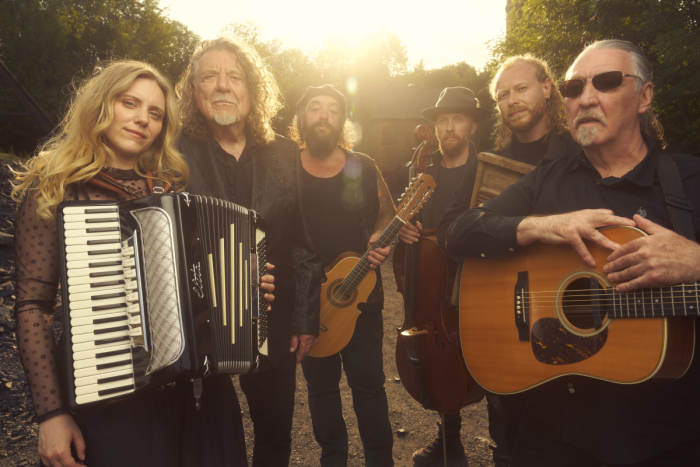
Robert Plant with Saving Grace and Suzi Dian - SOLD OUT
w/ special guest Rosie Flores
Spring Fever 2026
Add to Cal
TICKETS
$54–$99. + fees
MEMBER + ARTIST PRE-SALE: Wed, Dec 10, 10 am. Want pre-sale access? Become a Lensic member!
PUBLIC SALE: Fri, Dec 12, 10 am.
VENUE: KIVA AUDITORIUM
SEATING: Yes
ALCOHOL: Yes
OUTSIDE FOOD/DRINK: No
PARKING: Yes
ADA: Yes, please ask for accommodations prior to the show
Please be advised that by entering this event, you are agreeing to being filmed and/or photographed, and the resulting assets may be used for Lensic marketing or promotional purposes. Should you wish not to be photographed or recorded on video, please notify a staff member or one of the event photographers/videographers.
ROBERT PLANT WITH SAVING GRACE
Though Robert Plant is, literally and figuratively, the biggest name on the cover art for Saving Grace, he would be the first to say that the album is very much a group effort, with its title also serving as this new band’s moniker. The group members were drawn together by a shared love of roots music both vintage and modern—of blues, folk, gospel, country and those tantalizing sounds that lay in between. Like Plant, they’re keen to explore how these genres are evolving as well as to discover where these repertoires originated—and how collectively they could reinvigorate the music they loved.
This sensibility is reflected in the songs that made it to the final track listing, from familiar traditional numbers like the plaintive “I Never Will Marry;” the African-American spiritual “Gospel Plough;” and “Chevrolet,” which Donovan had adapted into his “Hey Gyp (Dig the Slowness)” back in 1965 to beautifully rendered outliers like Providence, RI trio The Low Anthem’s haunting “The Ticket Taker;” revered indie-rock duo Low’s epic “Everybody’s Song;” and Moby Grape’s pastoral “It’s A Beautiful Day Today.” Plant, who produced the album with the band, rarely claims center stage, most often sharing vocals with co-billed singer Suzi Dian and sometimes ceding the mic to her entirely. On Blind Willie Johnson’s “The Soul of a Man,” guitarist-banjo player Matt Worley takes the lead, with Dian and Plant serving as backup.
Despite Plant’s iconic status as an artist since his days with Led Zeppelin, Saving Grace managed to start out in 2019, casually and somewhat discreetly, as a local project. The players had been working collaboratively for barely a year, even serving as an unheralded opening act on a handful of dates with Fairport Convention when the pandemic intervened and any formal plans to tour or release music were temporarily shelved. That turned out to be less setback than serendipity. It allowed Saving Grace time to gestate, to find a collective voice.
Once Covid protocols permitted, they began to record informally in a barn set-up and sometimes outdoors, hanging microphones in the trees; when the doors to clubs and concert halls opened once again, they booked themselves without fanfare into local venues. There were no press releases, not even a website. Only the evocative image of the lone bison that is now used on the album cover and as a backdrop for their shows.
Plant was clearly no stranger to this music: He’d already received great acclaim for his brilliant, unexpected and Grammy Award-winning foray into roots music with singer and fiddler Alison Krauss—“the queen of Champaign,” as he calls her—and, before that, alongside Patty Griffin and Buddy Miller, in his 2010 version of Band of Joy. But those were his American cohorts. Until Saving Grace, Plant had never found such like-minded collaborators when he came home to the Welsh borderlands. As Plant says, “It’s an impressive collection of people now. I can’t tell you how lucky I feel about this.”
It all began down the pub, in the sort of place where one might have discovered a common thread, a shared passion, with another stranger-turned-new friend before the internet and algorithms took over. As Plant explains, “I came back one time and there was this guy, Matty Worley, a big guy who plays cuatro, two different strung banjos, and acoustic guitar. Thanks to his father, he had been following the Ian Campbell Folk Group, Peggy Seeger, and the people who worked alongside her.
“I met him in a bar, I didn’t know him, but he was very forward and what he wanted to know all about was my relationship with the Incredible String Band. He was eager to know how much I had to do with Dave Swarbrick and Sandy Denny and suddenly we were talking about a world I really loved, that I had been attached to since I first started out, playing washboard in a delta blues band in 1963. He had a vast arsenal of points of reference. I started to get to know Matt and his energy and his knowledge and then his dexterity as a player. It seemed to me I’d found some sort of conversation. I started sharing some songs out of the thousands of songs I’ve yet to put out, and we said, ‘Let’s see what we can do with this.’”
Plant suggested bringing along guitarist Tony Kelsey, “a remarkable guitarist who played around in a lot of different musical set ups. At one time, he was a member of The Move, in one of its many incarnations. We started playing together, shuffling this stuff around and seeing where it would go. And it was really good. But the thing is, I said, ‘I don’t want to be on the sharp end.’ I always talk about singers holding up the sharp end of a performance. I knew I needed another voice on a lot of these songs. Where was the female voice? Where was the sweetness on top of my register? I knew about Suzi; she had her own band, and she is a great singer. I suggested she come along and have a listen to some of the songs I liked. She has spent quite a bit of time teaching, running classes and instructing teachers on how to bring kids forward in music. She’s as sensitive and equally as delicate. She had no premonitions at bringing these songs into the world.”
Krauss had schooled Plant on how to sing harmonies, and the lessons stuck: “She’s taught me so much. It was a beautiful coming together with two radically different voices and the harmonic swell of it. I was given a crash course in listening to other singing; it has been a major moment in my life as a singer. It’s extraordinary what that did for me, and what Alison has done and what she will remain and still do somewhere down the line.”
After trying out a conventional drummer, Plant turned to Dian’s husband, Oli Jefferson: “He had a more polyrhythmic approach; we discussed the whole deal of where I really want to take my music. There’s nothing particularly obscure about what we present on this record. It’s just a different way of doing it.”
The sound of Saving Grace at times incorporates elements of the hypnotic, droning grooves that distinguished Plant’s larger, electric combo, the Sensational Space Shifters, who backed the singer on his prior Nonesuch albums, lullaby…and the Ceaseless Roar and Carry Fire. There are hints of Malian desert blues and psychedelic folk. (With the Space Shifters, Plant notes, “We were playing around with stuff that was an amalgam of things. I like the mélange.”) The sound can seem alluringly mysterious at times, melancholic and foreboding, as on “The Ticket Taker” or “As I Roved Out,” a traditional song performed in an arrangement by fellow Nonesuch artist Sam Amidon, who reassembles folk classics into stark mediations on love and fate. The group takes a tune by North Carolinian singer-songwriter Sarah Siskind, whose work Krauss has also covered, and sneakily transforms it into a folk-rock rave-up. They bring similar drama to Low’s “Everybody’s Song.” “Higher Rock,” by Portland singer-songwriter Martha Scanlan, a one-time member of string band the Reeltime Players, has a simpler, yearning, up-tempo feel, showcasing Dian’s voice.
Cellist Barney Morse-Brown, aka Duotone, rounds off the ensemble, on record and on tour. The group first ventured from their local haunts to Ireland, where, as Plant recounts, “Of course what do you do in Ireland is you laugh, you sing, then you end up in folk clubs, at arts festivals on the west coast off the great wild Atlantic way. That whole folk community, the fiddle and the bodhran. It was so appropriate to the way I felt and have felt since I was a kid, about that area, that quadrant of my musical love.”
Though Plant headlined stadiums in his storied past, now, he admits, “What I am really impressed by is this living, new world of whatever this music is. Last year we played the Cambridge folk festival. With this mélange of music song and voice, anywhere and everywhere is the way to see the road ahead.
“I’m not jaded by this,” Plant says, finally. “It’s been a revelation—the sweetness of this thing. These are really sweet people. They’re playing all the stuff they could never get out before. They’ve become unique stylists and have created a new place for the old dog.”
—Michael Hill