







Search










Bob Schneider
June 4thThe Suffers
June 5thJoe Jackson + Band - SOLD OUT
June 5thFox Fest
June 6thLilo and Stitch
June 6thÁsgeir
June 10thThe Altons
June 11thFruit Bats
June 13thFlamingosis
June 13thDoctor Nativo
June 14thVincent Neil Emerson
June 18thSearows
June 18thSir Woman
June 19thGregory Alan Isakov
June 19thJuneteenth Celebration: Sudan Archives
June 20thWhen Harry Met Sally
June 20thDirtwire & The Floozies
June 20thSir Richard Bishop
June 20thA Conversation with Deb Haaland
June 21stHeartByrne
June 25thVincen García
June 25thDetroit Lightning
June 26thTurnover
June 26thThe Polish Ambassador
June 27thAn Evening With Brett Dennen
June 28thLos Lobos
June 29thRelaay
June 30thNosotros
July 2ndBlack Uhuru
July 3rdThe Halluci Nation
July 3rdFREE | The Mavericks & Friends
July 4thLos Texmaniacs
July 6thBaile Nuevomexicano
July 7thYeison Landero
July 8thWavves
July 8thMoby Dick
July 9thSinkane
July 10thKurt Vile And The Violators
July 11thMax Gomez
July 11thHooks & The Huckleberries
July 13thFantastic Cat
July 14thHoundmouth
July 14thDylan LeBlanc
July 15thEileen Ivers & The Brigideens
July 16thJames McMurtry
July 16thIn Conversation with NPR's Mara Liasson
July 16thMeow Wolf Monster Battle: Fleetmac Wood
July 17thChris Botti
July 17thPaul Oakenfold + The Crystal Method
July 18thBest in Show
July 18thRufus Wainwright
July 18thMarchFourth
July 19thABBAquerque
July 20thLumbre del Sol
July 21stDWLLRS
July 21stOld 97's
July 22ndABBAquerque
July 24thCracker
July 24thHandmade Moments
July 25thDustbowl Revival
July 27thJoe West's B-Day
July 28thTrish Toledo
July 30thBeach Bunny & The Beths
July 31stSanta Fe Salutes Yacht Rock
July 31stBoomBox
July 31stSanta Fe Cumbiero
August 1stThelma & Louise
August 1stThe Brothers Comatose
August 3rdBobby Alu
August 4thBlack Moth Super Rainbow
August 4thEagles of Death Metal
August 5thLos Straitjackets
August 6thDon Was & The Pan-Detroit Ensemble
August 6thLos Straitjackets
August 7thBanshee Tree
August 8thMonsieur Periné
August 10thGary Farmer & The Troublemakers
August 11thWidowspeak
August 11thIndigenousWays Festival
August 14thTeam Everything
August 15thMatilda
August 15thRev. Peyton's Big Damn Band
August 16thTropidelic & The Boomroots
August 17thManzanares
August 18thD.K. Harrell
August 20thBill Callahan - VENUE CHANGE
August 20thFantastic Negrito
August 21stThee Sacred Souls
August 22ndLisa Morales
August 22ndGov't Mule
August 22ndYung Bae
August 22ndPepper and The Movement
August 23rdIguanas
August 24thOh He Dead
August 25thJay Boy Adams & Zenobia
August 27thBig Bad Voodoo Daddy
August 27thSt. Paul & the Broken Bones
August 28thZootopia 2
August 29thNeal Francis
September 1stNuestra Musica
September 3rdDominique Fils-Aimé
September 5thBlossoms & Bones
September 10thMeltt
September 13thBig Thief - SOLD OUT
September 16thMavis Staples & Nathaniel Rateliff
September 19thTajMo
September 20thThe Midnight
September 24thPixies - SOLD OUT
September 25thThe California Honeydrops
September 25thToadies
September 26thJoshua Ray Walker
September 26thMidland
September 27thThe Magic School Bus
September 28thSammy Rae & the Friends
October 1stPatton Oswalt
October 2ndTribal Seeds
October 3rdAn Evening with Hampton Sides
October 3rdDamien Jurado
October 5thJeremy Dutcher
October 8thSnarky Puppy
October 9thRaynes and David Wimbish & The Collection
October 10thLP
October 11thPunch Brothers
October 11thWild Pink
October 13thDevon Gilfillian
October 14thAkram Khan Company
October 14th49 Winchester
October 15thTyler Ballgame
October 18thKishi Bashi
October 20thSilkroad Up Close
October 22ndAx and the Hatchetmen
October 23rdThee Sinseers
October 24thJulian Lage Quartet
October 26thThe Surge: an ode to Sinéad O'Connor's
November 4thUB40
November 4thGilla Band
November 8thBayonne
November 10thBuena Vista Orchestra
November 11thBahamas
November 11thPhilip Glass Ensemble: Powaqqatsi
November 12thDave Hause and The Mermaid
November 13thBluey's Big Play
November 19thNick Shoulders
November 19thMireya Ramos and The Poor Choices
November 20thBonnie Prince Billy - SOLD OUT
December 2ndBonnie Prince Billy - SOLD OUT
December 3rdBonnie Prince Billy
December 4thAoife O'Donovan and Chris Thile
December 7thPostmodern Jukebox
December 9thJudy Collins
December 22ndJoe Illick and The New Year's Eve Orchestra
December 31stBallet Hispánico New York
January 24thThird Coast Percussion: Ripples in the Water
January 27thAudra McDonald
January 29thPeking Acrobats
February 3rdDelfeayo Marsalis & The Uptown Jazz Orchestra
February 9thMalpaso Dance Company
February 18thInternational Guitar Night
February 24thJazz at Lincoln Center Orchestra
March 1stPalaver Strings
March 4thThe Boy Who Cried Wolf
March 7thThe Hot Sardines
March 12thLang Lang
April 1stAga Khan Master Musicians
April 4thBranford Marsalis and Dianne Reeves
April 7thYAMATO--The Drummers of Japan
April 21stChanticleer
April 30thThe Wailin' Jennys
June 1stThe Wailin' Jennys
June 2nd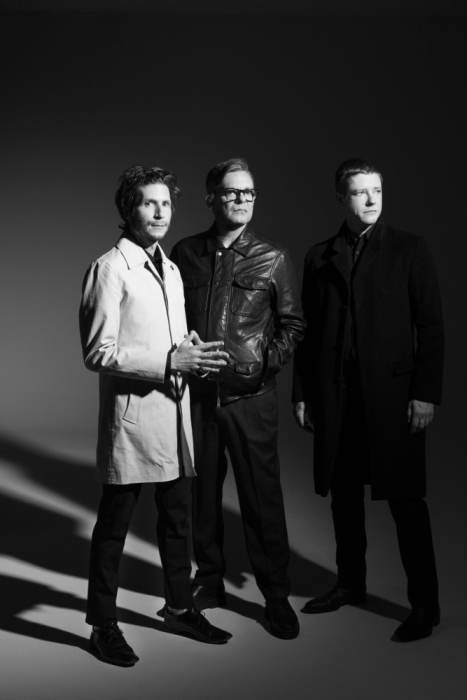
Interpol
w/ Model/Actriz
at
Revel
Add to Cal
TICKETS
$47.50 + fees
MEMBER PRE-SALE: Wed, Jan 7, 10 am. Want pre-sale access? Become a Lensic member!
PUBLIC SALE: Fri, Jan 9, 10 am.
VENUE: REVEL ENTERTAINMENT CENTER
SEE REVEL'S UP-TO-DATE INFO & VENUE POLICIES HERE
SEATING: Standing room only
ADA: Yes, please speak to a Revel team member
PARKING: Yes, at the venue
ALCOHOL: Yes
OUTSIDE FOOD/DRINK: No
Please be advised that by entering this event, you are agreeing to being filmed and/or photographed, and the resulting assets may be used for Lensic marketing or promotional purposes. Should you wish not to be photographed or recorded on video, please notify a staff member or one of the event photographers/videographers.
INTERPOL
“Still in shape, my methods refined,” sings Paul Banks on ‘Toni’, the opening track and lead single from Interpol’s 7th LP The Other Side of Make-Believe. The album breaks fresh ground for the group: parallel to exploring the sinister undercurrents of contemporary life, Interpol’s new songs are imbued with pastoral longing and newfound grace. Daniel Kessler's serpentine guitar arrangements crest skywards, Samuel Fogarino shatters his percussive precision into strange metres, while Paul Banks’ sonorous voice exudes a vulnerability that is likely to catch most long-term fans of the band off guard. After all, says Banks, “there’s always a seventh time for a first impression.”
The Other Side of Make-Believe began remotely across 2020. In early 2021, Interpol reconvened to flesh out new material at a rented home in the Catskills, before completing it later that year in North London, working for the first time with production veteran Flood (Mark Ellis), as well as teaming up again with former co-producer Alan Moulder.
If fate didn’t quite ordain the circumstances for Interpol’s seventh album, it was at least fortunate that the band had happily concluded their Marauder cycle on stage in front of 30 thousand-odd Peruvian fans. Rather than be sent scrambling like so many other musicians, when the first lockdown clamped Interpol had no new release to promote and no tour to rearrange. They quickly got into a productive mood.
Writing on their own in those geographically-dispersed early stages gave the members a way out of their respective heads: “We really extracted the honey out of this situation”, says Fogarino. Kessler echoes the sentiment: “Working alone was raw at first, but has opened up a vivid new chapter for us.” In the Interpol Venn Diagram, each member found a way of expanding their individual circle in perfect harmony.
As Banks was grounded in Edinburgh for close to nine months, he got cosy in a window- side chair with a pen, pad and atypically cream-coloured bass guitar. “We usually write live, but for the first time I’m not shouting over a drumkit,” he says. “Daniel and I have a strong enough chemistry that I could picture how my voice would complement the scratch demos he emailed over. Then I could turn the guys down on my laptop, locate these colourful melodies and generally get the message across in an understated fashion.” Banks adjusting his personal volume dimmer to a hush chimes with a period of global disquiet and the yearn for reconnection: “It’s like Mickey Rourke in Barfly, singing to a patron at the end of the tabletop, and we never felt the need to flip that smoky intimacy into something big and loud when it came to rehearse and record. I got a real kick out of doing the opposite.”
Coming from a group whose early material was characterised by Polish knife-wielders and incarcerated serial killers, you might expect Interpol’s take on the present day to be an emotional tar pit — perhaps doubly so, given the towering credentials of Flood and Moulder’s history with Nine Inch Nails, Curve, Gary Numan, Depeche Mode and more.
Yet Banks felt the call to push in a “counterbalancing” direction, with paeans to mental resilience and the quiet power of going easy. “The nobility of the human spirit is to rebound,” he says. “Yeah, I could focus on how fucked everything is, but I feel now is the time when being hopeful is necessary, and a still-believable emotion within what makes Interpol Interpol.” Kessler concurs: “The process of writing this record and searching for tender, resonant emotions took me back to teenage years; it was transformative, almost euphoric. I felt a rare sensation of purpose biting on the end of my fishing rod and I was compelled to reel it in.”
Even with spare piano caressing the intro of ‘Something Changed’, open-hearted cyclical chord progressions on ‘Passenger’, or anthemic waves of Kessler’s cresting guitar on ‘Big Shot City’, it doesn’t mean Interpol are entirely stopping to smell the roses, though. The Other Side of Make-Believe’s title, cover and a frequent lyrical lean toward fables, smokescreens and the mutability of truth reflect Banks’ disgust with the curdling of the information age. “I feel like the slipperiness of reality, and being willing to get violent on the basis of a factual disagreement, has had a super strenuous effect on the psyche of everyone in the world. Although,” he laughs, “I was talking about it so often that it kind of spooked my bandmates, so I found a way to express my concerns more through the lens of human beings; non-rational faculties, and less civilizational collapse.”
On The Other Side of Make-Believe, a deep interpersonal understanding means each member respects the other’s respective strengths better than ever, letting Interpol’s elemental qualities shine through. Song by song, Kessler sketches the architectural blueprint (invariably while watching a film — locus of inspiration for almost every song in the band’s catalogue), Banks frames artwork on the wall, then Fogarino arranges the furniture to have a certain positioning and intent.
Fogarino highlights Flood’s part in this equation “was to hyperbolise all of our good qualities. Our band has never exploited rock ‘n roll tropes, no big drum fills or wailing solos, so he located the core honesty in our sound and found a way to widen it. There’s a phrase I love about drumming: ‘the rhythm hates the melody’ — the best kind of drumming either totally accentuates what’s being conveyed, or ploughs through it.” So what does the splashy, dramatic beat on songs like ‘Renegade Hearts’ and ‘Gran Hotel’ imply? The answer comes back with a grin: “I guess Flood gave me room to plough.”
The band found themselves struck by the producer’s egoless way of operating and the breeziness of recording in his North London studio. They also seem charged by how much Flood and Moulder complimented, rather than challenged, their kinetic energy when performing. “I wouldn’t change a thing,” Kessler states. And though he means Flood and Moulder’s contributions, that sentiment extends to Interpol’s work as a whole.
The Other Side of Make-Believe will soon feel as familiar in the public consciousness as it is to Paul Banks, Daniel Kessler and Sam Fogarino. Ever the paradox, the noirish trio have weathered nearly seven albums’ and several line-ups’ worth of rollercoasters far better than anyone might have predicted, never letting their sense of purpose escape. Over time, tags like ‘alternative’ and ‘indie’ have even faded from view. They are simply a rock group nowadays; one of the most distinctive, consequential and enduring rock groups of the 21st century so far. And a quarter-century into their lifespan, the band are all fired up again. Interpol: their methods refined, still in terrific shape.